


Partner-sourced revenue comes from merchants a partner introduced to your app before they had looked at it. Partner-influenced revenue comes from merchants who were already evaluating your app when a partner helped them convert. The difference is who started the conversation, not who clicked install.
On this page
- What is partner-sourced revenue?
- How to tell partner-sourced from partner-influenced revenue
- Partner-sourced vs partner-influenced: the difference
- Why you should track both partner-sourced and partner-influenced revenue
- Which partner should get credit (and commission)
- The bottom line
- Track partner-sourced revenue without the spreadsheet

A merchant installs Recurpay, the Shopify subscription app, from the Shopify App Store. Your install data records it as organic, but the merchant first heard about the app weeks earlier from the agency building their store.
So is that an App Store customer or an agency referral?
It depends on what the agency did. The answer decides who gets the revenue share and which partners you invest in next.
This post shows what partner-sourced and partner-influenced revenue look like at Recurpay, why you should track both, and which partner should get credit and commission.
What is partner-sourced revenue?
Partner-sourced revenue is revenue from merchants a partner brought to you. The partner spotted the need, put your app in front of the merchant and started the conversation. Without them, that merchant probably wouldn't be on your app.
In the Shopify ecosystem, that partner is usually an agency, freelancer or consultant building or running the merchant's store. Through these agency partnerships, your app gets written into a project scope long before the merchant opens your App Store listing
Partner-influenced revenue is the other half. The merchant found you on their own, through the App Store, a comparison post or a peer, and a partner helped them get over the line by answering questions, vouching for you or handling setup.
This isn't only a subscription app thing. Say an agency is scoping a multi-vendor marketplace for a brand and writes Nexus, our marketplace app, into the plan for vendor dashboards and order routing before the brand has looked at any marketplace app. That's sourced. If the brand had already shortlisted Nexus and the agency just confirmed it could handle split orders, that's influenced.
How to tell partner-sourced from partner-influenced revenue?
Recurpay works with a large agency ecosystem. In August 2026 it reported 250+ partners, $93,000+ in referral commissions and $400,000+ in custom services (Recurpay on LinkedIn).
With agencies contributing to revenue in different ways, deciding who deserves credit can get complicated.
Consider a hypothetical scenario. On the first Monday of the month, Riya, a partnerships manager at Recurpay, has two agency emails waiting:
- Studio North: "We set up Recurpay for the new wellness brand we built. Where's our commission?"
- Copper Labs: "We vouched for you when the merchant was choosing between subscription apps."
Partner-sourced: when the agency introduces your app to the merchant
A first-time founder hires Studio North to build the Shopify store for her new wellness brand. She wants subscriptions but hasn't looked at any subscription app.
Studio North writes Recurpay into the project scope and sets it up on a development store, where it's free. Two weeks after launch, the brand moves to a paid plan. On paper, it's an organic install. But Studio North picked the app, scoped it and set it up.
That's partner-sourced revenue.

Partner-influenced: when the agency recommends your app over the alternatives
Raghav runs e-commerce for Kettlecrest Coffee, a Shopify Plus brand, and wants to increase subscriber lifetime value. He shortlists Recurpay and two rivals, starts free trials and still has questions about delivery schedules and skipping a month.
Copper Labs, the agency that manages his store, has worked with all three. They recommend Recurpay and handle setup through collaborator access. Copper Labs didn't introduce the app. Raghav was already evaluating it, but their recommendation turned a trial into a paid plan.
That's partner-influenced revenue.
What if the agency recommended the app but the merchant installed it themselves?
It's partner-sourced if the merchant first heard of your app from the agency, even though the merchant clicked install. If the merchant was already comparing apps and the agency tipped the decision, it's partner-influenced.
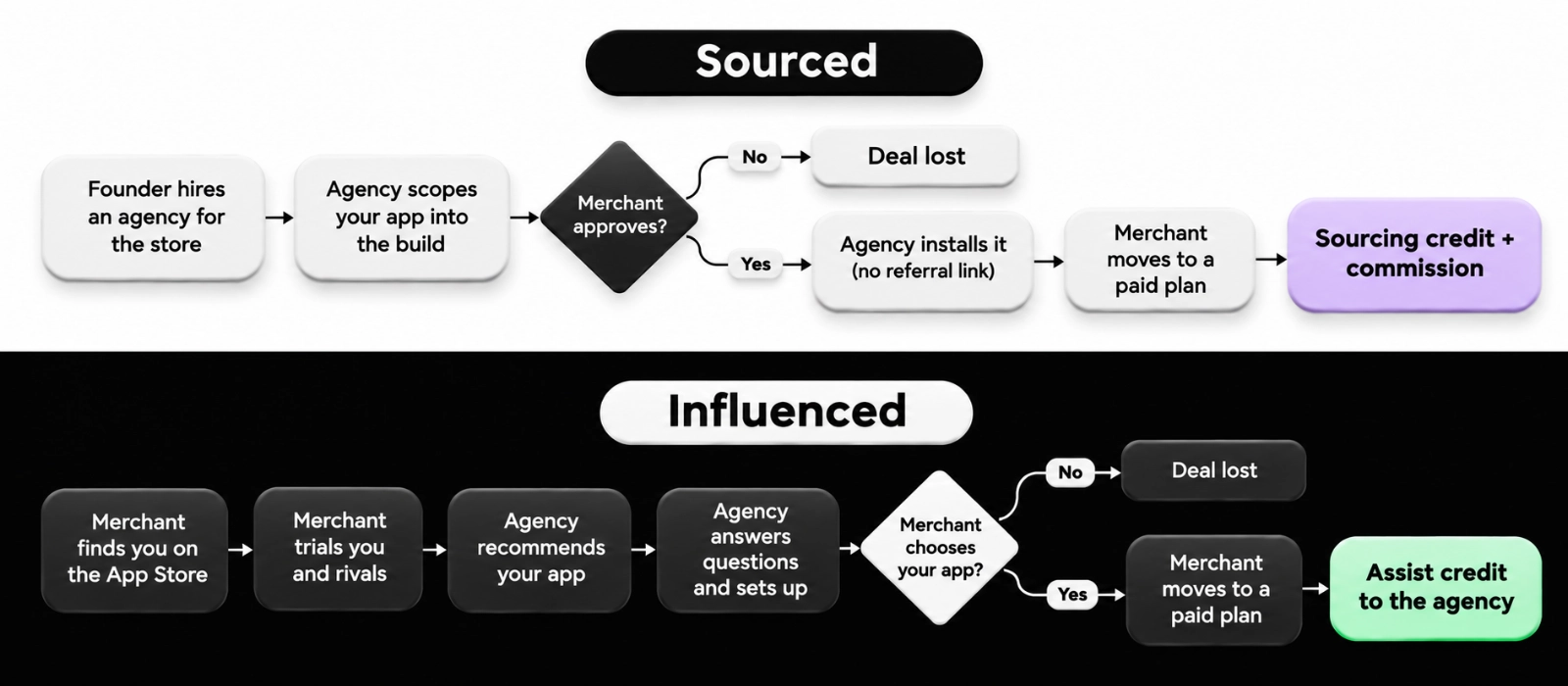
Partner-sourced vs partner-influenced: the difference
Why you should track both partner-sourced and partner-influenced revenue?
- Sourced revenue shows where new customers come from. It tells Riya which agencies, like Studio North, have earned a higher partner tier.
- Influenced revenue shows who helps you win. It points to agencies, like Copper Labs, that build trust in your product and tip close decisions. Those are your best co-selling partners.
- Together they show the real size of your partner channel. In Convert Commerce's Partnerships Benchmark 2026, 73% of the 102 partnership professionals surveyed said partnerships influence or source 26% or more of their revenue. Yet 51% settle multi-partner attribution by giving the credit to whoever touched the deal first, so a partner who influences a deal later can end up with nothing.
Which partner should get credit (and commission)?
Studio North and Copper Labs both helped, but they did different jobs, so they shouldn't get the same payout.
Here's a rule Riya can share with every partner:
- One deal, one sourcing partner. The partner who started the conversation, and can show it with a registered lead or clear evidence, gets sourcing credit.
- Sourced deals earn the higher rev share. For example, a recurring rev share for the first 12 months of the merchant's paid plan.
- Influenced deals earn an assist. Either a lower recurring rev share or a one-time referral fee once the merchant is on a paid plan.
- Conflicts go to the first registered claim. If two agencies claim the same merchant, sourcing credit goes to whoever registered first with evidence. The other agency gets assist credit if it genuinely helped.
- Payouts follow active paid plans. Commission is paid on merchants who stay on a paid plan, so a quick uninstall doesn't trigger a payout.
The exact percentages depend on your pricing and margins. What matters is that the rule exists before the dispute does. Under this rule, Studio North gets sourcing credit and the higher rev share, and Copper Labs gets an assist.
One caveat: this rule depends on agencies actually registering leads. Some won't at first, so expect a few evidence-based calls in the early months, and keep your evidence list consistent so those decisions don't feel arbitrary.
Next read: How to identify which partner can help close an opportunity covers what influence looks like on a live deal and how to ask a partner for help without pressure.
The bottom line
Who started the conversation decides whether revenue is partner-sourced or partner-influenced, not who clicked install. Credit both, but differently: sourcing credit and the higher rev share go to the partner who made the introduction, and a smaller assist goes to the one who helped close. And ask agencies to register leads before they install, so the credit lands with the right partner from day one.
Track partner-sourced revenue without the spreadsheet
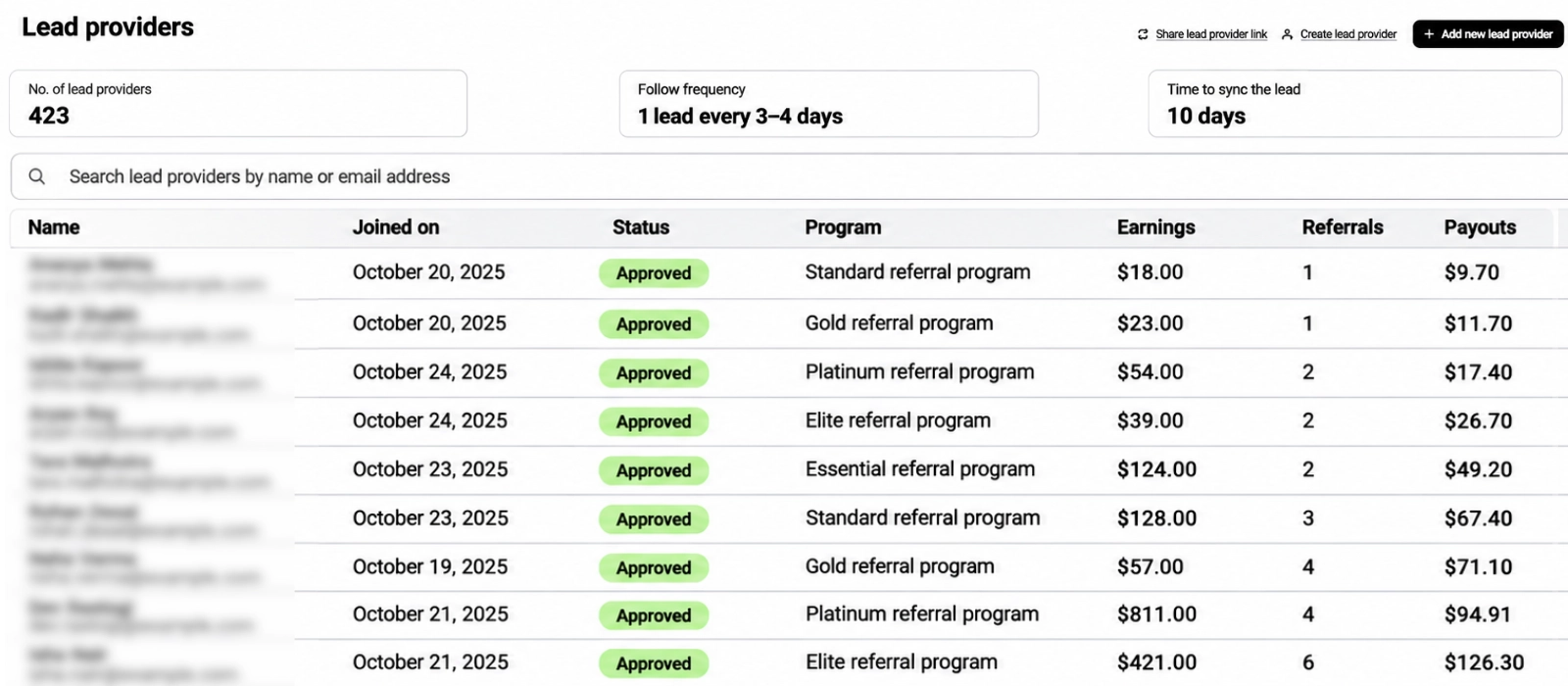
If your first Monday of the month looks like Riya's, Orbit puts it all in one partner revenue view. You see named lead referrals, revenue contribution per partner, and commissions, and payouts go out through PayPal, Stripe, RazorpayX or Mollie.
Frequently Asked Questions:
What if two agencies claim the same merchant?
Look at what each one actually did. Sourcing credit goes to the agency that registered the lead first and can show it started the conversation. If the other agency genuinely helped the merchant decide or set up, it gets assist credit. Write the rule down and share it with partners before a dispute comes up.
How long after an introduction does a referral still count?
Set a clear window and share it with partners before they start referring. For example, a registered lead stays valid for 12 months. Without a window, partners can claim merchants a year or two after the introduction, and you can't easily prove or disprove the claim.
How do you verify a referral when there's no referral link?
Look for evidence that connects the partner to the merchant:
- the brand's emails, or its staff's emails, match the partner's records
- the brand confirms on a call who recommended you
- the agency's credit or logo appears on the brand's website
- chat screenshots between the partner and the brand
- the partner's history of past referrals
The cleanest fix is to have agencies register the lead before the merchant installs, so the referral is on record before anyone needs to claim it. Orbit is built for this: partners log leads, and Orbit tracks those leads through to partner customers and payouts.
Comments (0)